Thursday, 5 July 2018

Research Portfolio

PRIMARY RESEARCH

Create your own user feedback survey


90 Second Depict Assignment Risk Assessment


TV Advert Releases


SECONDARY RESEARCH


DepicT Baconhorn by Oliver Marsden

I watched the 84 second video called ‘Baconhorn’. I liked this clip, because it is very different to the others, because it is more comic and was made for a laugh, rather than seriousness. It is about a boy, who ‘defeats’ his neighbourhood bully, however is made in a way that is rather stupid, but brilliant at the same time.


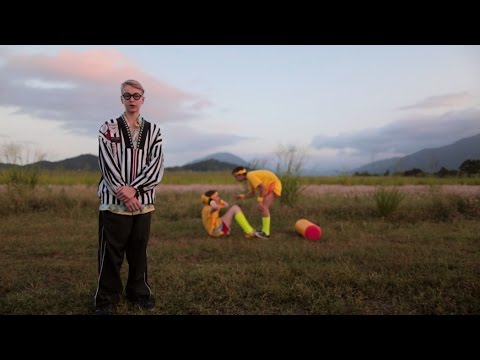
DepicT 'Run Boy' by Meg Bagadion

I watched this short 90 second video called ‘Run Boy’. I liked this video, because it is very well done. For example, the green cartoon mixed in with reality fits perfectly. There is also a use of the different camera angles, and sound effects that make it more creative, and are timed in perfectly with the video clips. It is also very gruesome and strange, but entertaining to watch. 


Tuesday, 3 July 2018

Location Release for Music Video

Having full authority to do so, I hereby grant Alannah White permission to use the property at East Norfolk Sixth Form College in room W21 for the purpose of photographing and recording scenes for the production Stolen Dance Lego Music Video during the hours of  9:30am until 3:40pm on the following days of: Monday, Tuesday, Wednesday, Thursday and Friday.

Permission includes, but is not limited to, the right to bring cast, crew, equipment, props and temporary sets onto the premises for the time specified. I understand that all items brought onto the premises will be removed at the end of the production period, and that the location will be fully returned to its original condition.

It is further understood that any damage to the property will become the responsibility of the cast and crew.

Crew Member

Signature:                                                       Printed Name: ALANNAH WHITE

Title: Miss                                                      Address: ENSFC. NR31 7BQ

Phone Number: 07453557619                       Date: 17/01/18


Property/Location Owner

Signature:                                                       Printed Name: Ellie Buchan

Title:                                                               Address: ENSFC NR31 7BQ

Phone Number: 01497 662234                      Date: 17/01/18

Location Recce Form for Music Videos

PRODUCTION: Stolen Dance Lego Music Video


SHEET NO. 1


SCOUT: Alannah White


DATE: 17/01/18


LOCATION: East Norfolk Sixth Form College


SITE: West Block and class W21


ADDRESS: Church Lane, Gorleston-On-Sea, Great Yarmouth, NR31 7BQ


PHONE NO. 01493 662234

CONTACT: Ellie Buchan (staff)


AVAILABILITY: Weekly and during term times


DAYS OF THE WEEK: Mondays to Fridays


TIMES OF THE DAY: 9:30am unitl 3:40pm


SPECIAL ARRANGEMENTS: None required


PARKING: Not required


DISTANCE/TIME FROM HOME: 45 minutes by bus


POWER CAPABILITIES: N/A


OBSERVATIONS: N/A

Wednesday, 24 January 2018

E-Sting Evaluation and Feedback and Responses

Create your own user feedback survey

Improvements from E-Sting Feedback

The feedback which i received from the class for my animation, is that i need to make my E-Sting longer and change the E4 music to suit the animation. Using this feedback i will make adjustments to my E-Sting by adding a game over screen at the end and showing the E4 logo for a longer period of time so that it doesn't end so abruptly. I will also change the music to be more upbeat, which will suit the animation more than the current sound track. 


E-Sting Evaluation

For my E-Sting I wanted to make it quite old and retro, so I chose the idea of doing a pong style animation. Based on my feedback I was given, the idea of the game was good and suits different age groups including the older generation, however there are improvements that I can make. For example I need to position the camera differently and change the angle it was facing down to make the animation fit the screen perfectly.
Also I will need to add things like sound effects to my animation for every time the little block bounces off the wall or hits the E4 logo, and make the animation longer by adding more frames, as it is quite a short animation. I can also change the music in the background to match the style animation more.

In evaluation I think I did quite well with my animation and it suited the target audience that I aimed for, however if I add these improvements then I can really boost up my grade that I achieved. 

Stop Motion E-Sting Responses

After we watched everyone in the classes stop motion animation videos, we were given criticism afterwards. 

The main criticism I received, was that I should have used a different music back drop than the one I have. This is because the only that is currently on my animation doesn’t quite flow as well with the video. It is also because if I had chosen a different music back drop it may have gone better with what my animation is about, and the style of it. 


I had also received criticism about the positioning of my video. If I would have positioned the camera slightly different then I could have had a better image for the animation and maybe would have not had to crop it quite a bit to get the positioning right. This could have saved a lot of time during the editing process of my animation. 

Wednesday, 17 January 2018

The Purpose of Music Videos

The Purposes of Music Videos Essay (1000 Words)

There can be many different purposes to a music video. One of the main purposes is to sell/promote the band. For example in the music video of Hate to Say I Told You So by The Hives, the name of the band was printed on the drummers drum kit, and badges spelling out their band name was on the guitarist’s guitar strap. These music videos also show the logo made up for the band, so that when people see this logo they familiarise it with the band. Another way of this is Synergistic Marketing. If there is a music video of a band that are wearing matching suits, the image of that band in those suits are printed onto multiple products. For example, bed sheets, room decorations such as picture frames and wallpaper, or smaller products such as plasters, magnets and badges, etc. Bands/artists also make money when they promote other products in their music videos, commonly known as product placement. A company will pay for them to advertise something like their new phone that has been released, which makes them more money.

Another purpose of music videos, is to make the band or artist more money. This is done by the videos being displayed on sites such as YouTube or Vevo, and is shown in adverts. Every time the advert pops up or the video plays the artist or band then receives a payment which makes them more money. Other popular sites that music videos are displayed or there is information about it are, MTV, Facebook, Twitter, Google, Wikipedia, and their official websites.  Artists such as Demi Lovato and Nick Jonas are setting up their own record label, to launch their own music project with Safehouse Records. This is a way of discovering new talent and making music projects, which essentially will make them and the Safehouse more money. If a song is downloaded from iTunes or Spotify, the companies will keep 60-70% of the download price.

Music videos are also made to grab the viewers’ attention and get them more interested in the band or artists music. For example in many music videos they have costumes, some keep the same costumes in all their videos so viewers can relate that costume with the band or artist. There are also lots of dancing and choreography, props, locations/settings, lighting and camera angles. These all make the music videos more appealing and exciting. Even weird and whacky videos grab the viewer’s attention, because they cannot stop watching it. For example Lady GaGa is commonly known for her extraordinary music videos, which essentially could’ve played a role in her claim to fame. All her music videos include multiple costume changes, scenery changes, many props and lots of lighting and camera angles to capture every single frame in the video.

Linking with the above paragraph, the skills/effects in a music video can also make people more interested in listening to the music as they’ll watch the video. An example of a music video that does this, is Eagle Eye Cherry’s Save Tonight. There are effects in this video that stand out and are different compared to other music videos made. In this video it is all one long take, but because it is one person playing multiple characters/roles, there are invisible cuts, the video merges and flows well throughout the whole song. For example he plays a character who robbed a shop and ran outside and was hit by a car and he plays the person who was driving the car at the same time. Some music videos make people interested because they are quite strange, for example Brockhampton’s music video for their song Star. Music videos can also be quite plain and relaxing and don’t involve many effects at all but are still appealing. For example, Sundara Karma’s music video for their song Flame, or Panic! At The Disco’s music video for their song Death of a Bachelor. These music videos are quite like the average music videos compared to Eagle Eye Cherry’s Save Tonight, because they involve many cuts when there are different camera angles.

Directors/filmmakers for music videos made can also be recognised by music videos. This is because the viewers appreciate the skills used to create the videos. An example of this is the music video for Fell in Love with a Girl by The White Stripes. In this, lego is used throughout the whole video, and it is animated to move with the video. For example, in some scenes of this music video, the lego people’s mouths move in time to the song playing. Credit is then given for the ambition and creativity of these types of videos, because they are very time consuming and involve a lot of effort. Another video example that could promote the filmmaker is the music video for Dare by Gorillaz, because of the animation used. These types of music videos can also be a reflection on the music that is made. If there is that much time and effort made for the music video, then there must be a lot more for the music by the band or artist.


Music videos also have the purpose of making the band or artist famous. For example OK Go are famously known for their music videos and because they put a lot of thought and effort into making them, for example their music videos; Here it Goes and Needing Getting. These sort of music videos also give the person listening something to watch whilst they are listening to the music. Some artists who are just starting out don’t have the money to create a large production so they make small videos with their music. An example artist of this is Tash Sultana when she released her song Jungle. She recorded a video of her singing and playing instruments in her living room, which she uploaded to YouTube and it was then released on different sides of social media and she became commonly known for it. 

I think music videos are so popular, because they are making the bands and other companies more money, and it gives the listener something to watch whilst listening to the music. These help the band to grow and become more recognised world wide. 

Wednesday, 8 November 2017

Research and Planning for Designing and E-Sting


Research and Planning: E4 and the Brief
Introduction:
E4 is owned by the Channel Four Television Corporation. It began on January 18th, 2001 at 8:30pm. The most viewers that E4 has is 475,000 and that is during the early peak of the day between the hours 17:30pm and 20:00pm. The programmes that are regularly shown on E4  are;
-         Hollyoaks
-         How I Met Your Mother
-         Rules of Engagement
-         Scrubs
-         90210
-         The Big Bang Theory
-         My Name is Earl
-         2 Broke Girls
-         Misfits
-         Made in Chelsea
-         The Inbetweeners
-         Alan Carr: Chatty Man
-         Supernanny US
-         Switched
-         One Tree Hill
-         Gilmore Girls
The primary target audience for E4 are ages 16-34, and the programmes are mainly focused on female viewers. Other channels owned by Channel Four, are;
-         4seven
-         Film4
-         More4
-         4Music
The film and programmes are also aimed at ages 16-24, because they are on later TV, usually 8:00pm and 10:pm. The music channel will also be for these ages because it is more modern and recent music rather than what older ages prefer.


E Sting:
E Sting, is a competition created by E4, for the public to create a 10 second video with the attitude of E4, and the winning videos will be broadcast on the UK’s number one channel for younger viewers.


This E Sting is mainly aimed at a younger audience of 16 due to its content of sweets and how strange it is. However it does contain scenes used for an older viewer, for example the alcoholic drink and the sweet pole dancing. I like this E Sting, because it is has a lot of bright colours so it is very appealing, and it is rather unique, because it doesn’t really make any sense.


This E Sting is mainly aimed at an audience 20+, because there isn’t a lot going on imagery-wise so it has a lot of loud noises and sound effects to grab the viewer’s attention, because visually it’s not very appealing. All that happens in this video, is a big red button being pressed and a bird flying into an E4 logo, and the colours are very dull so it wouldn’t grab the eye of a younger viewer. I like this E Sting, because it is more mature than others that have been made and there isn’t a lot going on at once so it is less confusing.


This E Sting would be aimed at younger audience of 16, because there are a lot of bright colours involved and there is a lot going on so the clip is very whacky and randomly produced. However this E Sting may also be seen as rather violent, because it involved a girl getting squished by a giant board. I like this E Sting because unlike the others, it includes a bit of violence, and the main colour theme is purple, which is the colour of the E 4 logo.

Previous Work in Preparation:
Thaumatrope, Praxinoscope and Zoetrope videos:
Lego Stop-Motion Animation:
The intention of this task was to create a short stop-motion animation made of lego, to get an idea of what using lego for an animation would be like and whether or not that’s a material we’d like to use in the future.
Live Action SMA and Inanimate Object Animation:
The intention of this task was to create a stop-motion with any inanimate object. For my animation I used a piece of paper and an envelope, and made them move across the paper move across the table and jump into the envelope. This was to display that you can bring any object to love and make it move in ways that are impossible to do so until animated.

My E Sting:
For my E Sting I will most likely be using lego for the animation. This is because it is a lot easier to work with than Claymation, as lego is a lot easier and quicker to build and construct than clay, as you have to get every little detail perfect.

Risk Assessment for Designing and Planning and E-Sting


Tuesday, 17 October 2017

History of Animation


History of Animation
Praxinoscope
The Praxinoscope, is a strip of pictures placed on a circular material of a spinning cylinder. It was invented in France in 1877 by Charles-Emile Reynaud. The Praxinoscope was an improvement of the zoetrope which used slits to see the animation. When a person looked through the larger hole of the praxinoscope whilst it was being spun, an animation was displayed on the mirrors of the moving images.

Thaumatrope
The Thaumatrope was invented in 1825, by John Ayrton. It is a disc with an image on either side with a piece of string either side to spin it with. When the image is spun with the string at a certain speed, the two images are combined. For example a bird and a cage.

Zoetrope
The Zoetrope was invented by William George Horner in 1834. It is a cylinder with a strip of images along the side, which is spun to make the images look as though they are moving, for example a person running, or someone on a galloping horse. There are slits around the cylinder to look through to see the motion of the images.

Phenakistoscope
The Phenakistoscope was invented by Joseph Plateau in 1832. It is a large or small wheel of images with a stick as a handle at the bottom to hold whilst the wheel is spinning. When spun the images move to create the affect the for example someone is jumping up and down.

George Pal:

George Pal was born on the 1st of February, 1908, in Cegled, Austria. He was highly developed in drawing skills and although there were no opportunities for an architect when he left university, he began working at Hunnia Films in Budapest. He created titles for silent movies, and learned about motion picture animation.
In 1931-1932, George Pal also worked at UFA Studios which was in Berlin, and was the head of the cartoon department. He started taking a liking into animating inanimate objects, which led to his stop-motion photography.
He was most famous for his Puppetoons films, including;


- The Ship of the Ether
- The Time Machine
- War of the Worlds
- The Seven Faces of Dr. Lao
- The Power
- Doc Savage
- Tulips Shall Grow


Willis O'Brien:

Willis O'Brien was born on March 2nd, 1886 in Oakland, California. When he was a teenager he thought of himself to be a boxer, however started writing stories and took on the path of film making and animating.

In 1933 he began working on the animation of King Kong, and 16 years later in 1949 he became the he head technician, and started to work on the animation of Mighty Joe Young. These were also the two animations he was most famous for producing. He also made;


- Creation
- War Eagles
- Gwangi
- Valley of the Mist
However, these animations were never made and published.

Ray Harryhausen:
Ray Harryhausen was born on the 29th of June in 1920, in Los Angeles. After seeing George Pal's King Kong, at 13 years old he started researching film effects and stop-motion photography. After World War 2 he started working with Willis O'Brien and started working on animations with him.
Harryhausen became most famous for his 'The Beast from 20,000 Fathoms' film in 1953, after he was hired by Warner Bros. He is now famously known for his stop-motion special effects in fantasy films.

Phil Tippett:
Phil Tippett was born on September 27th, 1951 in Berkeley California. When he was a child he was inspired by Ray Harryhausen's stop-motion The Seventh Voyage of Sinbad and King Kong by Willis O'Brien. He then got a Fine Arts degree from the University of California.
He started to help create effects and stop-motion for films, and his most famous work from doing so was The Empire Strikes Back and Return of the Jedi. When he left ILM and created Tippett Studio, he created his own stop motion animations,including Honey I Shrunk the Kids, Willow, Dinosaur!, and the Robocop Trilogy.

Otmar Gutmann:
Otmar Gutmann was born on the 24th of April, 1937 in Schwarzwald, Germany. He is a German TV producer, and is famously known for creating the children's TV series Pingu.

Tim Burton and Henry Selick:
Tim Burton was born on August 25th, 1958 in Burbank California, and Henry Selick was born November 30th, 1952 in Glen Ridge, New Jersey.
Tim Burton is known for his gothic and dark films and worked closely with actor Johnny Depp. These are films he is most famous for;

- Beetlejuice
- Edward Scissorhands
-The Nightmare Before Christmas
-Ed Wood
-Sleepy Hollow
- Corpse Bride
- Dark Shadows
- Sweeney Todd, and many more.
Henry Selick is a director and writer and produced the films Coraline and James and the Giant Peach. He also helped Tim Burton in the making of The Nightmare Before Christmas. He had a fascination with animation at a young age, and started drawing from the ages of 3. He later enrolled at CalArts to study animation.

Adam Shaheen:
Adam Shaheen was born on the 13th of October, 1964 in London, England. He is a television producer, and is also the owner of Cuppa Coffee Studios. He has produced in shows such as, Jo Jo's Circus, The Wrong Cast, Celebrity Deathmatch, Little People and Starveillance. He has produced over 400 commercials, and worked with big companies such as Cartoon Network, Nickelodeon, Disney, Warner Bros, MTV and many more. Due to this, he has also won 150 international awards.

The Brothers Quay:
Stephen and Timothy Quay are identical twins born on June 17th, 1947 in Norristown, Pennsylvania. They are both stop-motion animators, and are well known for their play 'The Chairs'.
They both studied at the Royal College of Art in London, and after they left university they began to make films. Their most famously known work, is Street of Crocodiles, and they have also worked with the BBC and contributed in their films.

Nick Park:
Nicholas Park was born December 6th, 1958 in Preston, Lancashire. His first stop motion was made at the age of 13 years old, after he joined Aardman Animations. As a child he loved to draw and took after his father, who was an amateur inventor. He then studied art at Sheffield City Polytechnic.
His most famous animation he made was Wallace and Gromit, however he also created Chicken Run and The Wrong Trousers. He made these animations out of clay models, and the originals cost $20,000 to replace when they got lost.

Stop Motion Animation:

TV Programme - Aimed at younger children

Feature Film -  Aimed at younger children

Advertisement - Aimed at ages 14+

Music Video - Aimed at ages 16+

Ident (Channel Indent) - Aimed at ages 16+

Conclusion:
I think that stop-motion animation is made to give a different effect on animations and films, and to make impossible things possible. For example stop-motion animations move differently to other animations.
I also think that in the future we will keep stop-motion animation rather than replace it with computer animation, because stop-motion has been around for too long and has been used in some of the best films and animations ever made. It also gives a different effect to what computer animation does.

Tuesday, 26 September 2017

The Nature and Purpose of Research

The Nature and Purpose of Research
What is Primary Research?
Primary research is research conducted by you, which can involve surveys, questionnaires or interviews.
The research that I conducted in my documentary, involved gathering information off different websites, and collecting different images to show the different types of tattoos.
Research Portfolio


Create your own user feedback survey


What is Secondary Research?
Secondary research, is using past work made by other people, to apply to your own work. For example, books and newspapers.
However, in my documentary work, I did not use any secondary research, which is what I could improve on for next time, to make my work better.
What is Quantitative Research?
Quantitative data is the amount of data used in the research, which can be made into many useful statistics. It is also the mathematical and numerical analysis of the data used.
In my news broadcast for my documentary, I used a small amount of quantitative data, however, for future reference, I could use more to improve my work further.
What is Qualitative Research?
Qualitative research is exploratory research and is used for gaining understanding of a certain subject. It is also to find out peoples different opinions and thoughts on a subject.  
The qualitative research I used in my documentary was when I asked different people why they chose to get tattoos, and what their tattoo means personally. I displayed this in the documentary.
Explain what the BARB does:
BARB, stands for Broadcasters; Audience Research Board. They started in 1981. They deliver official viewing figures for the UK 26 million TV households, and they are owned by BBC, ITV, Channel 4, Channel 5, BSKYB, and the IPA (Institute of Practitioners in Advertising).
What is IMDB?
IMDB stands for Internet Movie Database, and is an online database for movies, programmes and video games, giving you detailed information on them, which also includes the actors. It is owned by Amazon, and was launched 27 years ago on October 17th 1990, and was created by CEO Col Needham.
Audience and Market Research:
Audience and market research is the information gathered to determine whether the audience is suitable for the production made, and if it is something that they would enjoy or be interested in. An example of this is for our E-Sting videos, when we had to make a survey to get others opinions on our video, and if it is suitable for the target audience and meets the requirements set.
Production Research:

The production research, is the pre-production paperwork that we have to do before we start filming our projects. These include; risk assessments, talent releases, location releases, finance sheets and story boards. These are to get permission by both cast in the production and places that filming will be taken place, e.g. local shops.


Wednesday, 28 June 2017

Documentary Mini-Task

Documentary Mini-Task
 
What is a Documentary?
 
A documentary, is based around images, interviews and facts on a real event that has occurred, or on topics of your choice, and are presented in a report style format, in a short or long film.
 
What is a Participatory Documentary?
 
A participatory documentary, is when the person producing the documentary takes part of the production, and is on camera themselves. An example of this would be David Attenborough or Louis Theroux.  These types of documentaries usually give off strong opinions and arguments, and the encounters between the film-makers and people in the film are a very vital element.
 
What is an Observational Documentary?
 
An observational documentary, is when the filmmaker observes the production, will a small voice over in the background. These types of production are designed for intimacy, and the revealing of an individual character.
 
What is an Expository Documentary?
 
An expository production is when the filmmaker speaks to the viewer, which is often in an authorative form. These types of documentary are rhetorical and do not often include images. They are often described as using "the voice of god", which is to describe the producer speaking.
 
What is a Reflexive Documentary?
 
A reflexive documentary is when the producer assumes that the viewers are just as interested in the topic of the documentary as they are. They often use a centre question to their topic, and there are also a minimal amount of crew used in the production.
 
In my opinion, I think that a documentary is made to get its point across about a certain subject, and to educate the viewers of that matter as well. This could also change others views, outlooks and opinions on others, life, and the subject presented. 

Documentary Proposal

Documentary Proposal
 
Equipment Used:
 
- Camera
- Tripod
- Sheet for questions
 
Story Outline:
 
The outline of the story is that different people were documented on their tattoos, however they were all asked the same questions provided. The purpose of the documentary was to find out why different people get tattoos, and why they are a popular ongoing trend.
 
People in the Production:
 
- Carl Simmonds
- Rhys Granaghan
- Jordan Simmonds
- Leah Mileham
- Arianne Grey
 
The Target Audience
 
The target audience was mainly aimed at ages 16+ to give those wanting a tattoo a clear idea of why others may want them, or for those who already have them, then why other people chose to have them done, and if its the same reason as them. 

Research Portfolio

PRIMARY RESEARCH Create your own user feedback survey 90 Second Depict Assignment Risk Assessment TV Advert Releases ...